Sunday, March 10, 2024

Political and financial costs of migrants in the US


The ongoing migrant crisis in the United States has become a definitive issue for the country and its elected officials as they attempt to grapple with the influx of over 100, 000 people mostly from Central and South America, after being sent to Northern states by Texas Gov. Gregg Abbott in August of 2023 and has also become a central issue in the November presidential elections, especially by the presumed Republican nominee, Donald Trump, as he attempts to regain the White House after losing to Joe Biden, indeed, immigration has become a central plank in his undeclared campaign platform.


Reprising his previous statements in the 2016 campaign, he has also told his base that the migrants are poisoning the bloodlines of Americans, and blaming the increase to President Biden, who has struggled with the burgeoning crisis, and has given piecemeal contributions to the welfare and housing of their families, as well as to individuals, while there is a deliberate pushback in receiving cities such as Denver, Los Anglees and Chicago where residents have fought against housing them in their communities; but, for some observers,this is ironic,since many are descended from immigrant ancestors.


Despite, or perhaps because of American nativism, seen in the New York Draft Riots of , 1863 and the resulting backlash against Irish arrivals (who were frequently lampooned in cartoons of the era), shows the receptivity of Trump’s message on ready ears. And, he has said, if re-elected, he would round up migrants and deport them to their home countries.


For many Americans there is no distinguishing between asylum seekers, protected by international law, and illegal immigration, and, as some in the national media have noted, for many, the facts don’t matter.


Recently overheard on a bus in Chicago, was an elderly white man yelling about polluted bloodlines by the immigrants, mostly who are Venezuelan, and blaming Biden for “allowing them in,” while some heads nodded in agreement.


Chicago has approximately 12,000 migrants residing in shelters across the city, of the more than 36,300, reported by The Chicago Tribune. 


Taking a wider look, and turning back to Abbott, he has sent, according to the Texas Tribune,102,000 migrants to Northern cities including New York, to the tune of $148 million from his state coffers.


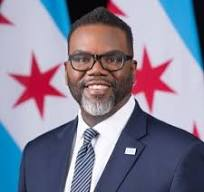
For the receiving cities, the subsequent financial cost has been a burden and the new mayoral administration of Brandon Johnson, has struggled to keep up,bleeding cash, to the tune of $1.5 million each day. A trip last November to meet with White House officials for $5 billion in help did not materialize.

Federal help to migrants is currently limited to three methods: the Temporary Protective Status, governed by The US Secretary of the Dept. of Homeland Security for those people unable to return to their homes, and offers temporary work permits for Venezuelans, and others in the country arriving before July 31, 2023. Asylum seekers can seek work permits after 150 days of residence


Then there is Asylum, for those fleeing their home countries to evade persecution due to “race, religion, political opinion or other factors,” reported Crain’s Chicago Business.. 


The third is Parole, (separate from the criminal system) which the government grants to those people to determine admittance for humanitarian benefits, making them eligible for work permits. But, all three of these three routes are overburdened by administrative and technical challenges with the software used to access the program.


What remains is inadequate and the Republican dominated U.S. House of Representatives is reluctant to take a much needed legislative effort for fear of giving support to the Biden reelection campaign, but as we have noted before in 1965 the Immigration and Nationality Act favored skilled immigrants and family reunification rather than a country quota, and in 1986, the Immigration Reform and Control Act legalized “millions of unauthorized immigrants, mainly from Latin America, who met certain conditions.”


Since that time Congress has failed to pass comprehensive immigration law and new rules for asylum seekers, bringing us to this current juncture.


Chicago news stories of immigrant mothers reusing diapers, being served bad food, and suffering abusive staff has not helped Johnson’s efforts, especially since many from the city's traditional white ethnic communities did not want another Black mayor after the defeated, and much maligned, Lori Lightfoot.


Backlash from advocates for the homeless community has also been strident as have those from some members of the local Latino leadership, and individuals who protest that some of the recent arrivals are getting work permits, while undocumented residents have labored in the shadows, being taxed without representation, for years. A protest held on Saturday in the Pilsen neighborhood did just that.

.

Adding further fuel to the fire are longtime Chicago Black residents, who have faced decades of racial discrimination, and feel that they are being discriminated against, and are being passed over, and many have expressed their frustration with Johnson for his help to the migrants.


As we were told some months back, falsely, by an older Black woman, “the migrants are getting $7,000 a month.” These sentiments echo much of the tensions in Chicago,and reverberating in other urban areas receiving large influxes of immigrants.


Money to help them settle in the States is a central issue, and at the end of February, Illinois Governor J.B. Pritzker rolled out a proposed $52.7 billion budget, of which he has included $182 million for the new arrivals.


WTTW, Chicago’s PBS affiliate reported that, "Leaders say that amount, combined with funding from Cook County and potentially the city of Chicago, is enough to cover the crisis through the end of the calendar year”.


They also noted that “Pritzker used amplified rhetoric to make his case for the funding, chastising Illinois’ three Republican members of the U.S. House of Representatives for recently voting down a federal immigration overhaul “because Donald Trump told them to, and they’re afraid of him.” Pritzker also reprimanded Texas Gov. Greg Abbot for transporting nearly 36,000 asylum seekers to Chicago.


“Children, pregnant women and the elderly have been sent here in the dead of night, left far from our designated welcome centers, in freezing temperatures, wearing flip flops and T-shirts. Think about that the next time a politician from Texas wants to lecture you about being a good Christian,” Pritzker said to loud applause from Democratic lawmakers. “Listen, maybe some of you think we should just say, ‘This is not our problem,’ and that we should let the migrant families starve or freeze to death. But that’s not what decent Midwesterners do. That’s not what leaders do. We didn’t ask for this manufactured crisis. But we must deal with it all the same.”


“However, Democratic reluctance has so far kept the General Assembly from approving the $160 million Pritzker diverted from this year’s budget in November to spend on the migrant response. It’s expected he’ll have to negotiate to get members of his party on board with the additional $182 million, given that members of the minority party are openly hostile to the idea.”


Meanwhile in Denver local and state budgets are being stretched to the limits to provide basic humanitarian need after spending $60 million, and Mayor Mike Johnston has said while the early morning arrivals of people dressed in shorts and sandals left homeless on the streets is not a sight he wants to see, told USA TODAY, “we don’t want that to happen but we also know that we can’t provide an infinite amount of services. We’re having to pull back the amount of services we can provide, the number of people we can serve, and figure out how to balance the budget to get there.”


Saturday, March 9, 2024

Strong gains continue with February Jobs Report


Once again the February Jobs Report released on Friday by the US Labor Dept. showed a strong, and dare we say it once more, resilient job market for the world’s largest economy, at 275,000 jobs created, close to the 200,000 number for private employers released on Thursday.

It’s no one’s guess when interest rates will decrease and Federal Reserve Chair, Jerome Powell, as we have noted previously, is data driven and will not recommend that the Bank cut interest rates based on a few months of strong numbers. At the next meeting on March 19 to 20, most investors expect rates to remain the same, but some are hoping in June for a decrease.


“We’re waiting to become more confident that inflation is moving sustainably to 2 percent,” Mr. Powell told Congressional lawmakers on Thursday. “When we do get that confidence, and we’re not far from it, it will be appropriate to dial back the level of restriction.”


The Chair also said,”The economy is growing at a healthy, sustainable, solid, strong pace,” Federal Reserve Chair Jerome Powell said during a Thursday hearing of the Senate Banking Committee.


“We’re doing the best of anybody. We’ve got the strongest growth and the lowest inflation of the advanced economies,” he added..


That of course, is praise, but it also sends a note that cutting rates at this juncture could prove disastrous in overheating an already hot economy, currently the rate is 5.50 percent, and even a cut to 5.25 percent would prove unwise.


This is also the third straight month of job gains above 200,000, and Americans can look in the rear view mirror and see those depressing figures of the Covid pandemic that resulted in so many layoffs.


There was a slight uptick in the unemployment rate from 3.7 to 3.9 percent, but with monthly fluctuations being normal, the overall picture is still rosy, made even rosier that unemployment is under 4 percent for the 25th consecutive month.


Average hourly earnings increased to 4.3 percent, “We’ve recently seen gains in real wages, and that’s encouraged people to re-enter the labor market, and that’s a good development for workers,” said Kory Kantenga, a senior economist at the job search website LinkedIn, to The New York Times, and “As wage growth slows, he said, the likelihood that more people will start looking for work falls.”


Significantly, the labor force participation rate, or LFP, for those of prime working age, 25 to 54 has increased to 83.5 showing that many workers who were on the sidelines, have returned, and some, with continuing inflation returned to work, even part time; but, this could be higher if the United States offered subsidized child care. That being said, more flexible work schedules, increased wages and benefits are retaining a core of employees.


The pool of workers also increased with the immigrants that have been allowed to work, and those preceding them, from countries other than Venezuela, peaking between 120,000 and 200,000. Should Congress pass a comprehensive immigration bill reforming what was passed in the middle 1980s, that number could increase, especially for the unskilled labor force.


Taking a more comprehensive look at the household survey, or known in economic jargon as the U6, those not working, compared to those who are, is at 7.3 percent, a closely watched figure by some, but is often overshadowed by the banner, or marquee employment rate, is frequently cited, by the media, as well as by government officials.


Who were the stars in this report? Education and Health at 85,000 followed by Leisure and Hospitality at 58,000, and then Government employment at 52,000, with the continued growth of Construction, that had decreased hiring in the past, but now reflects the11th straight month, coming in at a strong 23,000.


Anirban Basu, the chief economist for the Association of Builders and Contractors told Engineering News Record that this was despite the “high project financing costs” and “elevated construction service delivery costs and lingering recessionary fears.”


Despite some concerns among economists, most agree that this is a strong report, and bodes well for the economy despite public concerns that the economy is in trouble, but this is based, as we noted last month, on the high cost of housing, and food prices, but nevertheless it will be an issue in the November presidential election.


Monday, February 19, 2024

For President Biden: How old is too old?


In the first 6 weeks of the new year, and with the ever increasing presidential election of 2024, one of the most overheated of political rhetoric has been the age of President Biden, and despite assurances from Democratic stalwarts who have dismissed this as unwarranted  political warfare, it has garnered headlines; and, then Republican presidential hopeful former governor of South Carolina, Nikki Haley, taking potshots at rival Donald Trump for confusing her with Nancy Pelosi, the former speaker of the House of Representatives, stating that if you asked any doctor they will tell you of the mental decline of those in their late 70s and 80s, a de facto acknowledgment of the ages of Trump and Biden, the former 77 years and the latter 81.

The clincher came last week when Special Counsel Robert Hur charged with investigating whether Biden would face criminal malfeasance for holding confidential papers from his days as vice president labeled him, our words, as a nice old man whole memory was so faulty he could not remember when his son Beau died.


It can be easily stated that this was not Biden’s week, and the claim that he could not remember his son’s death from brain cancer in 2015 seemed a low blow and caused a great deal of personal grief as he stated in the aftermath when according to the Associated Press, “And in response to Hur’s portrayal of him, Biden insisted to reporters that “My memory is fine,” and said he believes he remains the most qualified person to serve as president.


“How in the hell dare he raise that?” Biden asked about Hur’s comments regarding his son’s death, saying he didn’t believe it was any of Hur’s business.”


While Haley’s remarks, Hur’s opinion, and a slew of media coverage including the ribald, and often off color jokes that we have heard at bus stops, and in shops, gave us pause to examine outside of the rhetoric, the name calling, and the GOP baits: how old is too old, not only for the nation’s chief executive, but also in society in general, and in a society where men and women in their 70s and 80s are leading productive lives, and often working full time.


We also have often seen 90 year old's  described as the “new 40”. It was at this point we decided that there needed to be a closer examination of  age as a factor across the lifespan, especially in memory and intelligence; so this dictated a look towards the academy for a closer, more nuanced review, and away from political partisanship.


The basic questions remain: How controversial is age in the lives of 21st century people? How old is too old? Is cognitive decline inevitable?


A review of the psychological literature is revealing, and also moves beyond popular beliefs and even that of personal experience.


Let’s tackle some of the widely held beliefs, and yes, in early adulthood there is a peak,”for some types of learning and remembering” noted one psychology text, and research does show that as adults, younger people do have better recall said psychologists Donald Schonfeild and Bettty Anne Richards in a 1966 experiment.


Drilling down even further, within and without are not merely words, and psychological research has shown that there are minimal declines and greater decline, but it’s also important to realize that while recall can suffer, it’s not always age related, or even an interference in daily life, and with later experimental replications in 1990, it also seems that there are important distinctions in such variables as age, rural or urban home life; but, one conclusion stands out: older adults often have a rich storehouse of experiences to draw upon to examine, and weigh information, giving them a higher level of information processing that a comparatively younger person might not. 


Taking a brief detour from academic studies, and returning to the political arena, an older age political leader may have a distinct advantage over a younger one, temperament aside; so, if voters are taking an age stance in favor of someone say, two decades younger, then they may have to rethink that widely held belief.


Research has also shown that in some experiments 70 year old's can outdo 20 year old's, and perhaps lying outside that range, it might include people in their 50s.


It’s also been established in lab experiments that when attempting to recall faces while simultaneously performing another task, younger people can exhibit the same limitations in the standard identification of the prefrontal cortex (the area responsible for executive function and memory) of the brain as older adults noted Thomas H. Hess in a journal article, “Memory and Aging in  Contest,” in 2005.


Goal setting has also been established as a notable factor in retention, and “individuals are more likely to expend effort in expanding tasks that are persistent with personal goals.” 


The larger view is that while we “cannot generalize that older adults are more or less intellectually competent, we can’t say that they are more of less productive at work,” noted one psychology textbook, in a conclusion by Gibbon McEvoy and Wayne Casico in 1980, using a study of 40,000 subjects (workers) in 96 studies, with the text noting, “Apart from the inexperience of very young employees, age does not predict job performance.”


Sunday, February 4, 2024

January Jobs Report hits a milestone

Another blockbuster report from the US Dept of Labor was released on Friday with the monthly Jobs Report, this time with an eye popping 350,000 nonfarm jobs, far exceeding the expectations of most economists who were predicting 185,000 and an unemployment rate of 3.8, instead of 3.7 percent.

The fact the high numbers were spread across the board, in nearly all job categories made for another banner report and showed, as previously reported, that the US economy has regained nearly all the jobs lost with the pandemic, after a nearly 14 percent loss in employment since in those early days.


The news was not so good that the Federal Reserve will cut interest rates, as Chair Jerome Powell has indicated after the recent Federal Open Market Committee meeting, but his caution is legendary as a data driven leader; but, some, including him, are hoping that will change in May, while others are not so sure.


He has said, “I don’t think it’s likely that the committee will reach a level of confidence by the time of the March meeting.”


Standouts for January were professional and business services, a rather catch all term, say some, for a clutch of businesses, tech excepted, leading at 74,000, followed by health care at 70,000, which as we’ve seen has rapidly caught up with the pandemic losses.


The figure that was most watched, especially by Powell, was the wage increase of 0.6 percent, reaching a figure of 4.6 percent, that The New York TImes in their report, attributed to the plethora of white collar jobs, and their higher salaries.


Retail after some conservative holiday hiring was flat at 45,200.


“I think everyone is surprised at the strength,” said Sara Rutledge, an independent economics consultant. “It’s almost like a ‘pinch me’ scenario,” to the Times.


For President Biden who has faced criticism on inflation figures, despite a sizeable decrease, down to 3.1 percent in November, but now faces an increase in 3.4 percent, mostly attributable to increasing housing costs, this is not welcome news; but, the huge increase in employment is bound to be a boon to his reelection effort.


The low unemployment rate of 3.7 is notable, and “The fact that that’s been below 4 percent for two years running now is just a very clear and reliable signal that this is not just a tight labor market, but a reliably and persistently tight labor market,” said Jared Bernstein, chair of the White House Council of Economic Advisers.


“America’s economy is the strongest in the world. Today, we saw more proof,” said Biden in a statement.


Perhaps too strong? 


“There is simply no way that 350,000 job gains in a month is consistent with a further cooling of the labor market. This elevates the risk that nominal wage growth will not fall back to levels consistent with reaching the inflation target on a sustained basis, particularly as the labor force participation rate refuses to rise any further,” Brian Coulton, Fitch Ratings economist, wrote in a Friday commentary, as reported by The Hill.


Wages increased by 0.8 percent to $34.55, :doubling the monthly pace of headline inflation in December.” But, that does exceed the  stated goals of 3.5 percent growth to hit the Fed’s 2 percent inflation target.


In the area of consumer confidence, whose dollars drive the US economy, perception, as the old adage states, is one tenth of the law, and that confidence has grown according to the University of Michigan Consumer Sentiment Index,as high and this softening is real, according to Consumers Director, Joanne Hsu who wrote, “Consumer sentiment confirmed its early-month reading, surging 13% to reach its highest level since July 2021, reflecting improvements in the outlook for both inflation and personal incomes.”


Still some Americans are complaining about high costs, much of which may be attributed to the lingering effects of supply shortages, but as stated before, most of the pinch is felt in housing, especially in urban coastal areas. And, in contrast, polls show that, “Just 28 percent of Americans rated the economy as excellent or good, according to a Pew Research consumer survey of 5,140 adults from January 16th to the 21st, released Sunday,” according to The Hill.


Tacking high employment with increasing wages may be a delight to politicians, consumers, and some economists, but the delicate balancing act for the Federal Reserve is not over yet.


Monday, January 22, 2024

Trump leads New Hampshire as Haley tries hard


Fresh from the Iowa Caucus the three Republican presidential candidates vying for the presidential nomination lined up in order, Donald Trump Nikki Haley and Ron DeSantis all ready to face the voters and brave more frigid temperature to wind the hearts and minds, but most importantly the votes needed to secure the top spot.

Trump is basking in the glow of his expected victory in Iowa, as the declared front runner and his supporters have done their utmost best to say, game over and that all the contenders need to do is pack up and go home. But, Haley who scored the second sport in Iowa, has not given up the fight, despite trailing DeSantis by 2 points in Iowa. In her determined and often ladylike way she has seemingly mastered the art of retail politics: an eternal smile, a sincere handshake and a mastery of quick witted repartee, whose one liners could put her as the lead in a local comedy café.


A memorable line when asked about Henry McMaster’s support and appearance with Trump, Haley quipped: “I’m sorry, is that the person I ran against for governor and beat? Just check it.”


DeSantis, has faced an uphill battle against the juggernaut of Trump supporters , all sporting their red MAGA baseball caps, and proclaiming victory.  In what some have deemed an inconsistent campaign where his often wooden like demeanor has held him aloof form voters, despite earning some bona fide cultural credentials as governor of Florida: the Parental Rights Act dubbed the “Don’t Say Gay” bill, creating havoc at the liberal New College of Florida, railing against Critical Race Theory (erroneously believed to be taught in grammar and high schools) and waving the rhetorical banner that Florida “is the place where woke goes to die,” was having a connection problem with GOP voters, and this despite having his wife Casey, an attractive and articulate former TV news anchor, humanizing him in appearances; but, all to no avail, so much so that on Sunday dropped out of the race, and has pledged to vote for Trump.


Earlier, he had said that he was in the race to stay and swatted questions about his sagging polls, and low votes. But, now game over, and the ground has been conceded to Haley and Trump.


With the field narrowing to a two person race, many are now saying that Haley does not have a chance, that she has not connected with voters, and that her dependence on undeclared voters in New Hampshire, and the educated class might give her a boost. There is a roughly 50/50 split between registered Republicans and undeclared (independent) voters.


The slugfest is now present with Trump mocking, mispronouncing and misspelling her given name, Nimarata, as “Nimbra”, getting a responsive guffaw from his base, but also showing the same racial dog whistles, this time for her Southeast Asian heritage, that he has always done, since 2016.


Haley on the other hand, after he said that she was responsible for security on Jan. 6th and thus allowing the violent insurrection that overtook the Capitol, in 2021 had to eat some shoe leather, since she was not in office and not in Washington, D.C. The confusion, as the media has pointed out, is that Trump confused Haley with Nancy Pelosi, the former Democratic Speaker of the House.


She pounced on that, not name calling, but questioning his mental fitness for office, a point well taken, and she cited her aging parents, saying “that I love dearly” but that mental decline is inevitable for older people. Trump is 77  years old.


Rising in defense of the former president, GOP officials said that the two names began with the letter “N”, a weak and implausible explanation, but Haley poking at the soft underbelly of Trump placed a doubt in voters minds about the wisdom of electing a senior citizen an appeal to younger voters such as herself, at the much younger age of 52.


Continuing the theme of age, she also took a bipartisan swipe when she told those gathered at an appearance, “The reality is that he was confused. He was confused the same way that Joe Biden was going to start World War II. He was confused the same way that he said he ran against President Obama.”


She then topped off her remarks by telling those assembled, “Do we really want to have two presidential candidates in their 80’s?”


Senior moments aside, the latest polls show her between 34 and 36 percentage points, with Trump holding a commanding lead in the 50’s.


The Washington Post/Monmouth University poll has Trump, as of Monday, at 52 percent and Haley at 34 percent.


Her hope, and it is just a hope, is that she could win enough undeclared voters to boost her numbers, but that might be a Hail Mary pass on this political field. Some have also noted that she might try to hang in and win enough votes in her home state of South  Carolina, but FiveThirtyEight.com has her polling there at 25 percent to Trump at 61 percent.


Larry Sabato, director of the Center for Politics at the University of Virginia, told CNN: “if [Haley] loses on Tuesday, it almost certainly marks the end of her run.”


Monday, January 15, 2024

Iowa Primary: By the numbers for the GOP candidates

The late Tim Russert, host of NBC’s Meet the Press, was famous for his small whiteboard detailing the numbers needed to win the presidential primaries and elections; and, as the country heads into Monday’s Iowa Caucus, as their “first in the nation status”, the Republican Party begins the process of choosing its presidential nominee, we fondly remember that white board. And, while former President Donald Trump is the foregone winner, in the mind of most of his supporters, nipping at his heels,say some, is former U.N. Ambassador Nikki Haley, and Florida Governor Ron De Santis in a bid for that nomination.

In an election that seemingly began in earnest, almost two years ago, the stakes are high for many Americans, those wanting Trump to regain the Oval Office, and those that want Joe Biden to remain. Battle lines have been drawn, and the stalwarts are not shy about which of the two they want to see as president.


Lest those supporters get ahead of themselves, the American democracy has a process, primaries and caucus dominate, after the decades old conventions that used to be the stuff of mid century televised conventions, but which the GOP still uses.


It really is now a numbers game and the various polls require an examination of the numbers, and as many a political wag has noted, issues don’t matter, numbers do, so let’s take a closer look.


In an ABC average Trump “leads national primary polls with 60 percent of the vote . . . His closest rivals are 50 percentage points behind,with DeSantis polling “in a distant second place with 12 percent of the vote,  roughly tied with former Ambassador Nikki Haley.”


Trump then gains a 9 in 10 chance of winning the nomination they noted, with official selection being held at the Republican convention in July, where the delegates elected by contest across the country, and US territories will cast nominee ballots.


The electorate for the GOP has a cross section of populations, moderates, evangelical voters aside, and this is where some issues are significant to gain the needed delegates, as ABC noted 1,215 out of 2,429.


Issues that dominate are immigration, for asylum seekers, cultural issues such as transgender rights, hormone replacement for minor children, LGBT rights, and Critical Race Theory, all of which face mountains of disinformation.


Wedged into the battle for votes are abortion, and the anti woke ideologies that have been called out in Florida by DeSantis, who at one point was seen by some voters as a kinder and gentler version of Trump, but now Haley seems to be making that claim.


For Iowa there are 40 delegates at stake and both she and DeSantis need 22, and 26 to gain delegate majorities. One factor facing both of them is the severe winter weather that has brutalized much of the Midwest and which may keep voters away from the voting booths to avoid exposure to sub zero temps. Yet, Iowans are known to be hearty souls, but with single digit temperatures and sub zero wind chills, how much will that hold?


Using proportionality both the former ambassador and the governor need to get 55 and 65 percent of the vote, say pollsters, admitting that these are high numbers to reach.


In a recent examination by The Hill and citing an interview with DeSantis by CNN by Jake Tapper, he asked in lieu of sagging poll numbers whether his 3rd place standing might force him to drop out.


“CNN’s Jake Tapper asked DeSantis whether he would drop out of the race if he came in third place in Iowa, pointing to a recent NBC News/Des Moines Register/Mediacom that shows the Florida governor trailing former President Trump and former U.N. ambassador Nikki Haley with 16 percent of support in the state. DeSantis said on “State of the Union” that he predicted he would “do well” in the race in Iowa.”


“And so these are folks who are very motivated. Our voters are very motivated. We have spent a lot of time in Iowa because we’ve gone door to door getting people to commit to caucus to us,” DeSantis said.”


Trump, ignoring the debates in favor of his preferred town halls, ABC pollsters said he needed 53 of the 197 Super Tuesday delegates, needing 27 percent.


Taking the math further, with his commanding lead, in an all state vote, the former president would score 2,120 delegates of a possible 2,287, nearly 97 percent they noted.


It’s no secret that Trump is knee deep in legal battles, taking official documents after he left the White House, paying of porn star Stormy Daniels to keep her silent about their encounter, inflating the values of his properties to score bigger and better loans,  etc.,all of which in another era might be held against him, but now only serve two things: to give him the profile of a martyr, to his many supporters, and free publicity to enhance just that.


With his larger than life personality,  and love of publicity, we get it, but what worries his competitors is will they get it, those numbers needed to remove him from front runner status?


Aided by Fox news, Trump seems unbeatable in another round of debates with President Biden, so some poll watchers and handlers are thinking of a mano mano battle in November.


What startled many political watchers was former New Jersey  Gov. Chris Christie dropping out of the race on Wednesday, making some wonder if Haley can capture those votes for him. 


A closer look: Christie had about 11.5 percent of poll numbers in New Hampshire according to The Hill/Decision Desk HQ polling index and Haley “is polling 11 percentage points behind” Trump, so her team is probably chomping at the bit to get those votes.


She seems to have put her blunder about the causes of the Civil War behind her, though Christie had some ribald Jersey humor in his criticism of her ignorance, which she later tried to backtrack, and that seems to have worked. But the folks at the Hill have deemed this a fight between two moderates, now minus one. DeSantis seems to hang in there, but having lost the support of Trump, a long time ago, and with his aggressive stance, will siphon off delegate votes from the MAGA crowds is a central question.


The New York TImes columnist Nate Cohn says not, but notes thee is precedence for potential winds citing, “there's a lot of precedence for surging candidates to keep gaining, especially over a contest’s final days. With Mr. Trump at just 42 percent of the vote, there’s no reason to think her path is closed off.”


What remains at stake are not only Christie’s supporters, but the “never Trump” crowd, the moderates, the independents, suburban Republican college educated mothers, and those that might take a back seat in Iowa, even though Trump does hold substantial leads.


As expected Trump did win the Iowa Caucus with the support of rural, white, non college educated people, many of whom identified as Evangelicals, with 51 percent of the vote, along with 21 percent for De Santis, and 19 for Haley.


Voter turnout out was lighter than for previous caucuses, with 110,000 voters, of the nearly 752,000 registered Republicans, which many are attributing to the severe winter weather and deep snowfalls, as well as some voter apathy, but in the end Trump won 20 delegates, 8 for De Santis, and 7 for Haley.


Updated Jan. 19, 2024 at 9:40 a.m. CST


Saturday, January 6, 2024

December 2023 Jobs Explosion


Strong, steady, and resilient are some of the adjectives used to describe the U.S. economy in the recent December Jobs Report from the U.S. Dept. of Labor on Friday. It exceeded expectations with 216,000 non farm jobs, when 170,000 were expected, and whatever adjective those reading the report used, weak was not one of them.

Added to that figure was the unemployment rate of 3.7 and wages that showed an average hourly increase of 0.4 percent bringing a total of 4.1 percent  and fueling the goods news was that despite inflation, these high wages allowed many people to say ahead of inflation, which reached 3.1 percent; and, consumer spending, the traditional driver of the American economy became the bellwether for December.


A grace note: those wages totaled 4.3 percent for 2023, “the third highest level since 2008,” said The Washington Post.


This report also put to rest those Cassandra-like predictions of recession that populated the national media, only to be slayed.


Reaching historic standards, the unemployment figure is the largest stretch that we have seen since the mid 1960s, noted The Hill in its coverage.


Notable, and not surprising, was the rejoicing from the Biden administration, as he ramps up his reelection bid for a second term in the White House, and to note 14 million jobs have been created on his watch.


While the term Bidenomics might not mean much to Joe, or Jane Average, higher wages to meet, and exceed inflationary prices do.


“Wages and consumer confidence are up, the economy is growing, and in 2024 President Biden and Democrats will keep working to lower costs and get working families more breathing room,” said House Budget Committee member Brendan Boyle (D.Pa) in a call to reporters.


Even as far back as October Rob Haworth, senior investment strategy director at U.S. Bank Wealth Management, told usbank.com that the increases he saw then was because “consumer spending remains strong, which is driving the surprising level of growth we’ve seen.”


Taking a closer look at the numbers we do see that labor force participation edged slightly downwards to 62.5 percent, from 62.8, with a total figure of 700.000, one that the Federal Reserve Board will be closely watching.


The winners were health care climbing to 38,000, government to 52,000, and retail to 17,000 giving a solid showing to the holiday season.


On the losing side was transportation and housing down to 23,000, attributable, in part to higher interest rates, and  perhaps a pattern of vehicular sales tilted to SUVs rather than sedans.


Despite the good news, some economists noted that the total number of jobs for 2023 was 2.7 million, contrasted to the two prior years that surged after the pandemic, with gains in rehiring, but the records show that, 2015 excepting, these are still very strong numbers.


For Jerome Powell and the members of the Federal Reserve Board, the slowing of wages,coming down from those hot years, is welcome news. And, this concern is warranted since wages this healthy could lead to a broader spectrum pushing prices upward  that might lead to another round of inflation


It is important to note, as is the custom, December's numbers will be revised, probably downward, and reflected in the January report.


Finally, the cut for interest rates, anticipated for March, will probably not be seen until May in a survey of many economists, given that Powell is known to be data driven.